
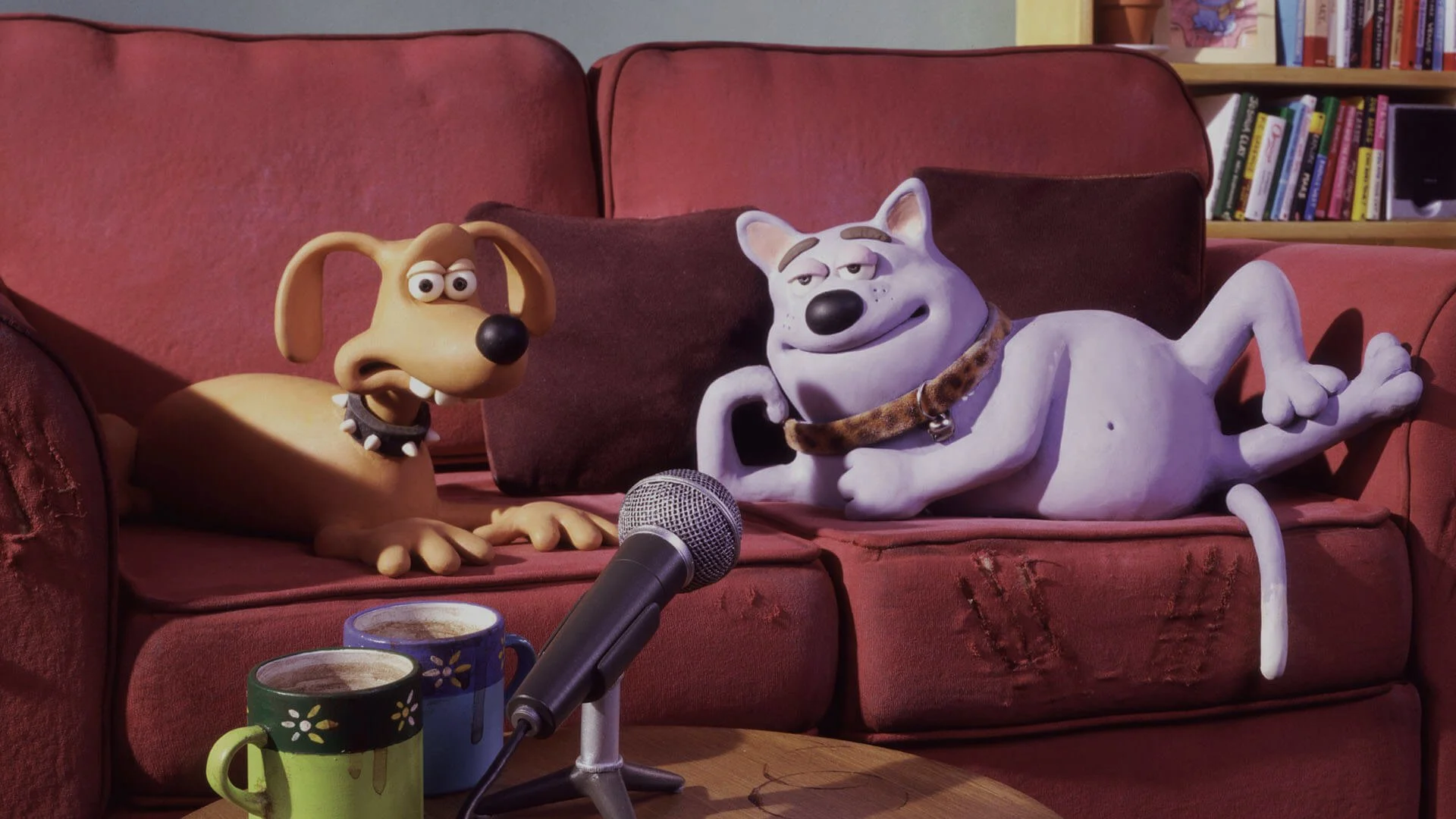
STORYTELLING USED TO BELONG TO FIRESIDES AND THEATRES…
Now it lives in interfaces, title sequences, animation loops, game worlds, museum spaces, and the silent choreography of design itself. The shift is not simply that stories are everywhere - it is that audiences no longer just watch them. They inhabit them.
The art of storytelling and the art of conversation both rely on responsiveness, rhythm, emotional awareness, and participation. At their core, neither is simply about transmitting information - they are about creating connection. Connection remains the constant thread. Across cave paintings, shadow puppets, cinema screens, and digital worlds, storytelling has always carried the same message: I felt this too. Technology changes the medium, but not the instinct behind it.
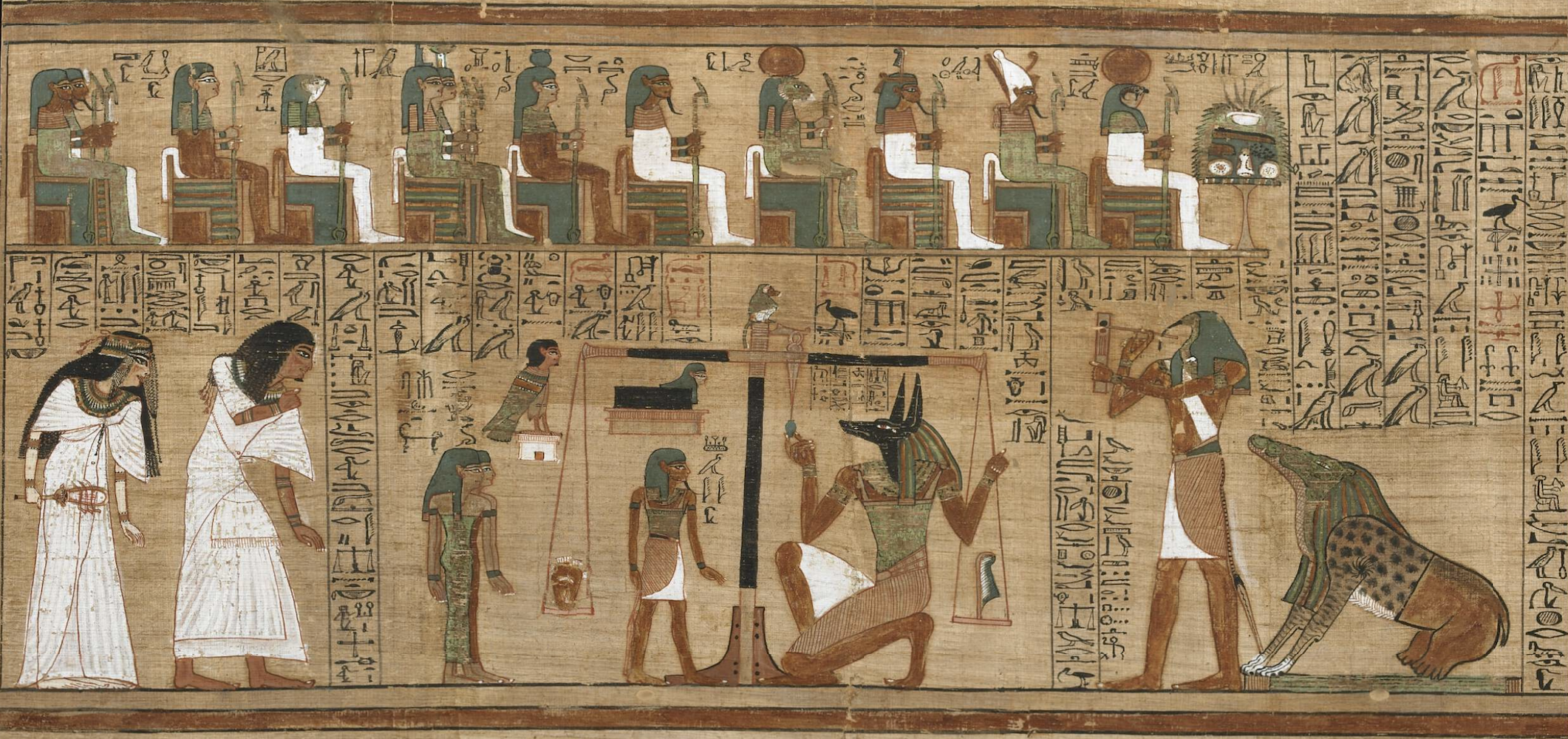
Egyptian ‘Book of the Dead’, Papyrus of Ani from the British Museum
History shows that the stories which endure are rarely the ones preserved unchanged, but the ones capable of adaptation. Oral storytellers reshaped tales depending on audience, place, political climate, moment, or even mood. Stories were never fixed artefacts; they were living exchanges between storyteller and listener.
This is why myths, folklore, religious texts, and cultural narratives survive - not because they remain historically literal, but because they evolve alongside the societies that carry them. Even sacred stories, whether from the Bible or other traditions, can be understood less as objective records and more as evolving moral frameworks shaped by the fears, needs, and values of their time.
The same is true of stories born from war and conflict. They endure not because humanity consistently learns from them - history suggests otherwise - but because remembering them keeps the consequences of power, violence, and ideology visible. These stories become cultural memory: warnings, reflections, and reminders of what people are capable of, for better and worse. Their emotional truth is often what allows them to survive long after the events themselves have passed into history.
Good storytelling is rarely about absolute originality. Every culture has explored love, fear, ambition, loss, absurdity, hope, and grief. What changes is the lens through which those emotions are reframed. A designer shapes rhythm and space the way a filmmaker frames a shot. An animator builds emotion through timing before dialogue ever arrives. A comedian bends expectation to reveal truth. Storytelling does not invent new emotions; it allows us to feel familiar ones again from a different angle.
The most powerful stories today are often built from fragments rather than grand narratives. A loading screen that eases frustration through humour. A film scene where silence carries more weight than speech. An animation that exaggerates movement just enough to expose vulnerability. These are not decorative details surrounding the story — they are the story.
Short-form video has intensified this fragmentation, as well as sadly reduced our attention spans. We want quick fix pills rather than investing in a 6 month course of counselling. And algorithms spoon feed us only the stories it thinks we wants, but not necessarily the ones we should hear. It decides what side we’re on and pushes that narrative regardless, rather than taking an interest in a wider view - that remains our responsibility to seek out. But where as we might hear stories from an outside village when someone rode in, or get a telegram across the water in years gone, now we have all the weight of the world’s stories on our shoulders at all times, and it’s hard to escape. The news is rarely positive, so we find TikToks, YouTube Shorts, and looping reels that compress storytelling into seconds: a glance, a cut, a sound, a reaction. Most disappear instantly, yet the strongest still land emotionally through discomfort, nostalgia, tension, intimacy, or recognition. The medium has accelerated, but the emotional mechanics remain unchanged.
Perhaps this responsiveness is what connects storytelling most closely to conversation. Stories enhance conversations, and conversations shape stories. But who hasn’t found themselves worrying about conversation becoming a dying art in recent times? We’ve all met those who talk at you, not ask you anything about yourself, no questions, just a wall of words. And should you be lucky enough to squeeze a sentence in, you can tell they’re reloading, simply waiting for the next opening to make another point, without having absorbed one bit of what you’ve said? There is no call and response, no back-and-forth (what I always thought conversation was…), just a avalanche of seemingly selfish and unaware self-interest.
And yet, the rise of podcasts reveals something surprisingly ancient beneath modern media habits: people still want to gather around a voice. In many ways, the fireside never disappeared - it just became digital. People still want to feel part of an unfolding conversation, not simply consumers of polished information. And thankfully, it proves that millions are still able and very happy to listen. Across the arts, storytelling can be most powerful and memorable when it behaves less like a lecture and more like a conversation.
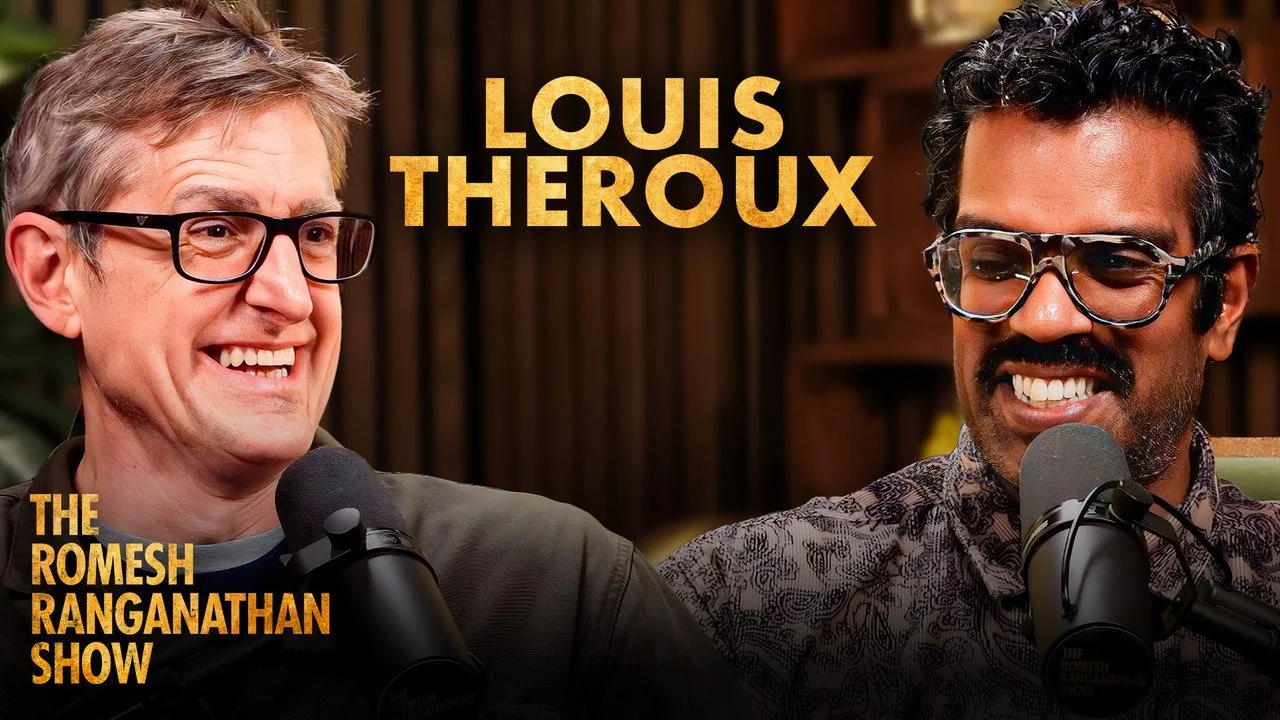
Romeshs’ podcast show with new guests each week
Storytelling is often mistaken for performance: speaking, presenting, persuading. But its deeper craft is in the listening, the attentiveness and quiet attention. The best storytellers are rarely the loudest people in the room; they are the most observant. They notice rhythm, hesitation, silence, humour, discomfort, curiosity. They listen for what is being said beneath the words.
Comedy depends entirely on this responsiveness and may be the clearest example of storytelling as live conversation. Timing is impossible without awareness. Comedians read rooms the way musicians read tempo. A comedian constantly adjusts timing, tone, and pacing based on audience energy. Humour depends on listening as much as speaking. The laugh arrives through tension and release, recognition and surprise. Even scripted comedy succeeds because it feels responsive. Humour is empathy moving at speed.
Music perhaps mirrors conversation most directly through rhythm and call-and-response. Jazz improvisation is essentially collective storytelling in real time — musicians listening, reacting, interrupting, supporting, and building upon each other’s ideas. Tension, silence, repetition, and variation function emotionally in music the same way they do in speech.
Design operates conversationally too. We rarely remember products, places, or films for information alone; we remember how they made us feel in a particular moment. The curve of a chair, the ToV and brand styling in an ad, the exterior of a building, the style of a shoe - all contribute to emotional memory. But great design does not impose itself. It listens before it speaks, it anticipates human behaviour and responds intuitively. An interface guides rather than commands. Architecture influences movement and emotion through space, light, and atmosphere. A well-designed object “communicates” how it wants to be used. In this sense, design becomes a silent dialogue between creator and participant. And it lives or dies on the stories it tells and the success of the conversations it creates.
Film understands this instinctively, directors “speak” to audiences through pacing, framing, silence, and reaction. Its emotional power often lives in reaction rather than the dialogue - the pause before an answer, the expression that quietly changes a scene’s meaning, a lingering shot that invites the audience to emotionally respond rather than passively consume.
In animation, conversation often happens without words at all, whether it be between characters on screen, or in reaching the audience. WALL-E builds empathy almost entirely through gesture, timing, and observation. Personality is built through observation rather than speech. The audience “reads” emotion the way we read body language in real life. Animation exaggerates human rhythms — hesitation, awkwardness, joy — making emotional communication clearer and more universal. Meaning is formed collaboratively, in the space between what is shown and what is felt. It is quiet conversation, silent understanding, but conversation none-the-less.

WALL-E
Blade Runner 2049 tells its story through emotional architecture: colour, scale, emptiness, weather, and light communicate isolation more powerfully than exposition ever could.

Blade Runner 2049
Even visual art contains conversation. Long before cinema, the Bayeux Tapestry achieved something remarkably similar — sequential visual storytelling unfolding across space, combining history, propaganda, symbolism, and rhythm into a flowing narrative, asking viewers to move through that space and construct meaning actively. Today, contemporary installations and interactive media make this even more explicit by requiring audience participation to complete the work.
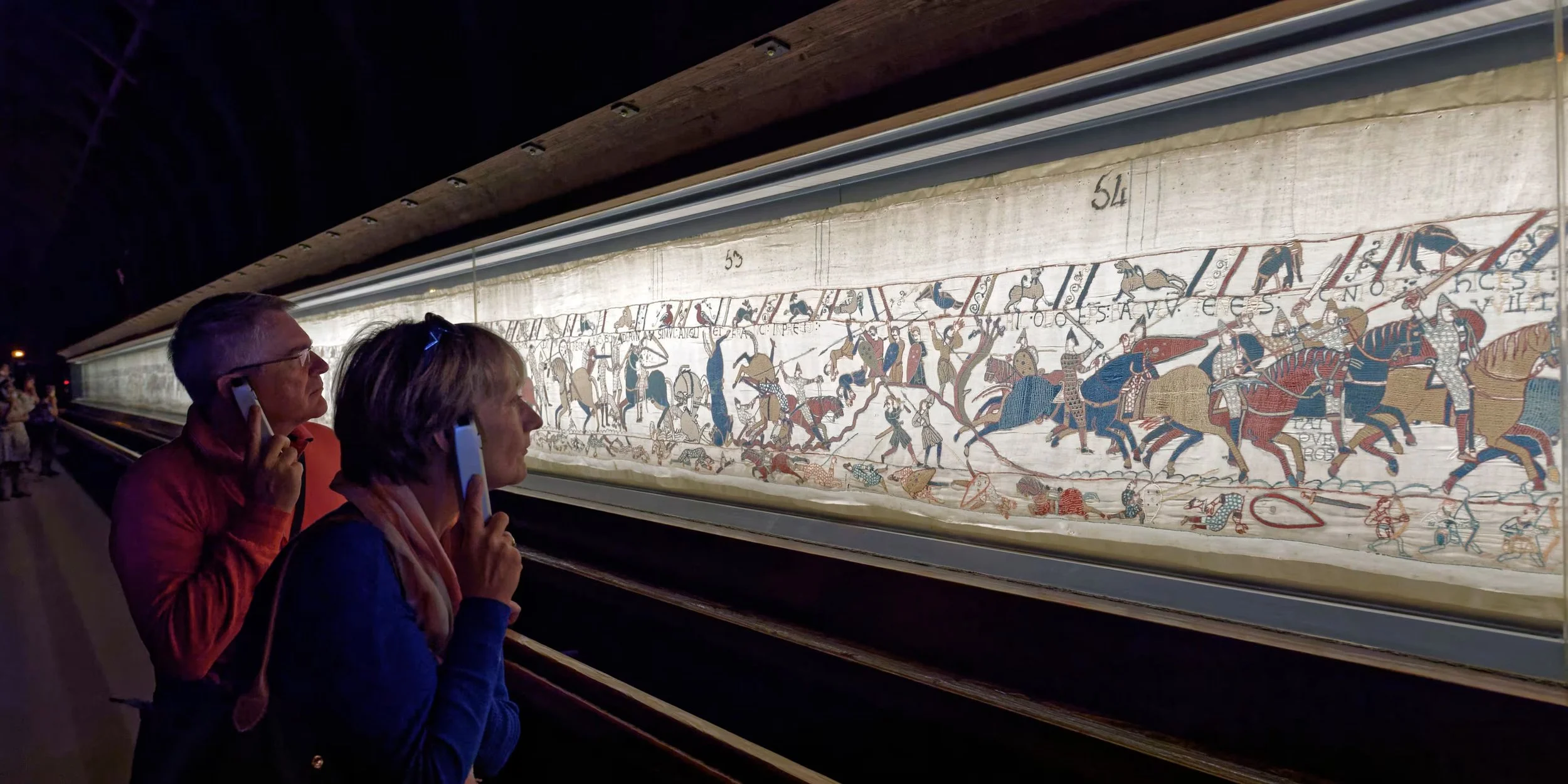
The Bayeux Tapestry
What connects all of these pieces is that they do not simply present stories or events. They create emotional participation. The audience infers meaning, feels the pauses, and completes part of the story internally. That is often the mark of great storytelling: it leaves room for the audience to co-author the experience. Meaning it is never entirely delivered by the artist alone. It emerges in the space between expression and interpretation.
So how do we tell better stories in a world saturated with noise?
Perhaps by becoming more observant than performative.
Listening without planning the next sentence.
Watching emotional cues instead of waiting to speak.
Allowing pauses.
Responding rather than delivering.
Treating conversation as improvisation rather than presentation - A real conversation is a living edit.
Empathy is not agreement; it is attention - to be sensitive, intelligent, have the ability to recognise another person’s emotional position and respond in real time. That responsiveness is what makes dialogue feel alive rather than scripted.
Is this where storytelling is heading next: away from monologue and toward participation? Not simply telling stories to people, but creating spaces where stories can move, evolve, and breathe between people. Because storytelling has never really been about inventing entirely new emotions. It has always been about helping us recognise ourselves inside old ones - through new forms, new aesthetics, new technologies, and new ways of seeing each other.
Of course, now we also have to contend with A.I. and the complex questions it introduces. Stories were once understood as distinctly human - hand-crafted, lived-in, and imbued with intention - yet that understanding now feels unsettled by growing concerns around plagiarism, provenance, authenticity, value, and what it truly means for creative respect to be earned. A.I. learns by ‘scraping’ the web for it’s knowledge base, but so far, it doesn’t listen and doesn’t feel. We still have that going for us!
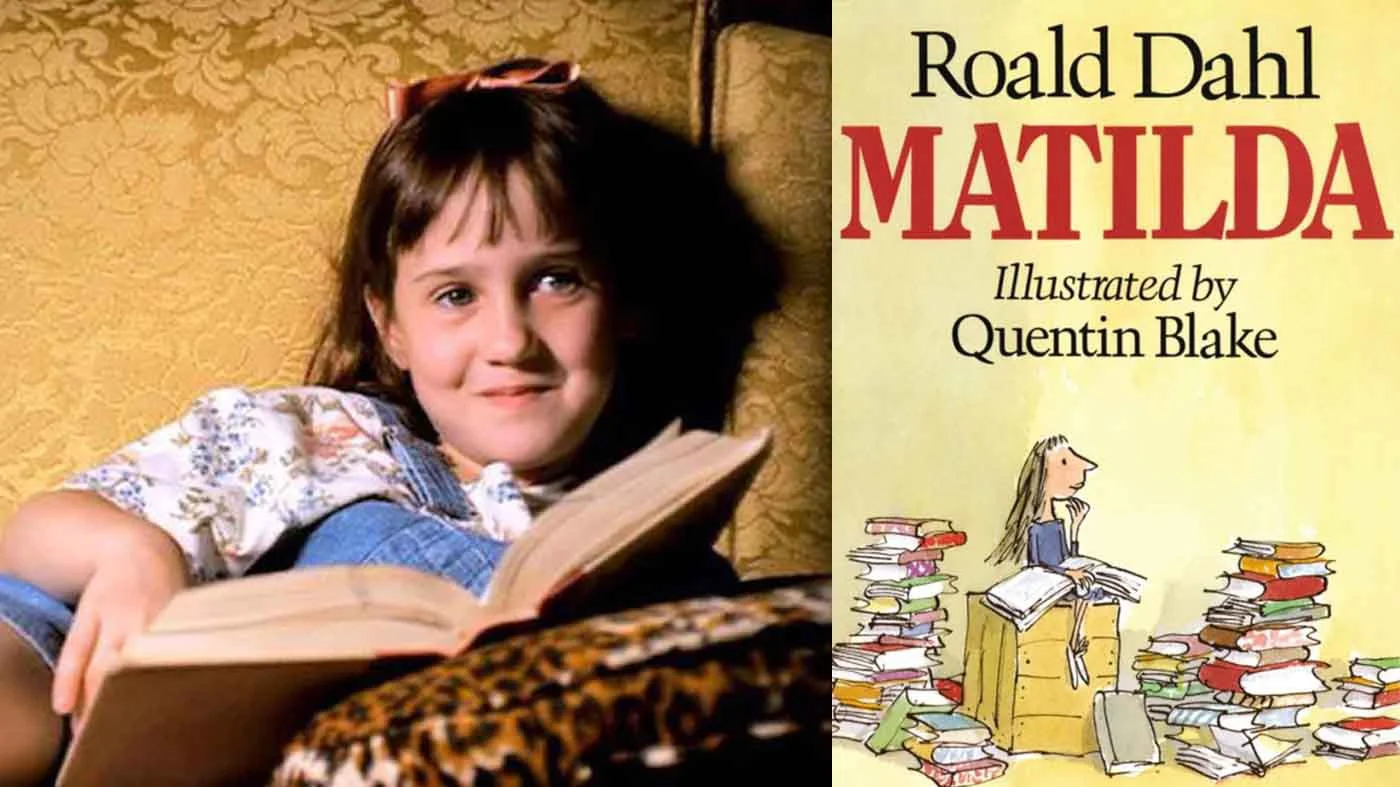
One of huge volume of books created by Roald Dahl, also turned into films and adored by young and old
The best storytellers are often great imagineers, who were just fine creating their tales long before A.I. landed, but they were also great listeners. They understood rhythm, silence, tension, hilarity, curiosity, and emotional timing. They knew when to guide and when to leave space. A story that overwhelms the audience with explanation can feel lifeless; a conversation that never allows response feels one-sided.
Good design continually returns to this principle: people do not just want to witness stories - they want to recognise themselves inside them. In that sense, conversation may be the oldest storytelling technology we have. It begins with stories, but it ends with conversations - that is where messages are fully understood, remembered, and shared. Which allows us all to learn, change and evolve, just as stories have since the first cave paintings.
But no story or conversation, no matter how compelling, can only ever be really heard, unless we truly listen.

If you are inspired at all by these ramblings, please get in touch...
Or if you’re interested in having a chat around how our creative agency might help you with some positive design, please say hello@steamboatcreative.co.uk
Steamboat are a traditional and digital design marketing agency. Our studio offers a variety of creative services, from strategic brand communications (through identity, print, copy, illustration, website design, film and animation) to R&D and concept art for the games and film industries. But we believe there's nothing a great designer can not turn their hand to and solve with style.
Locally we love working with clients across Suffolk, Norfolk, Cambridgeshire, Essex and London. Further afield we have clients across Europe, New York and somewhere outside Saturn.